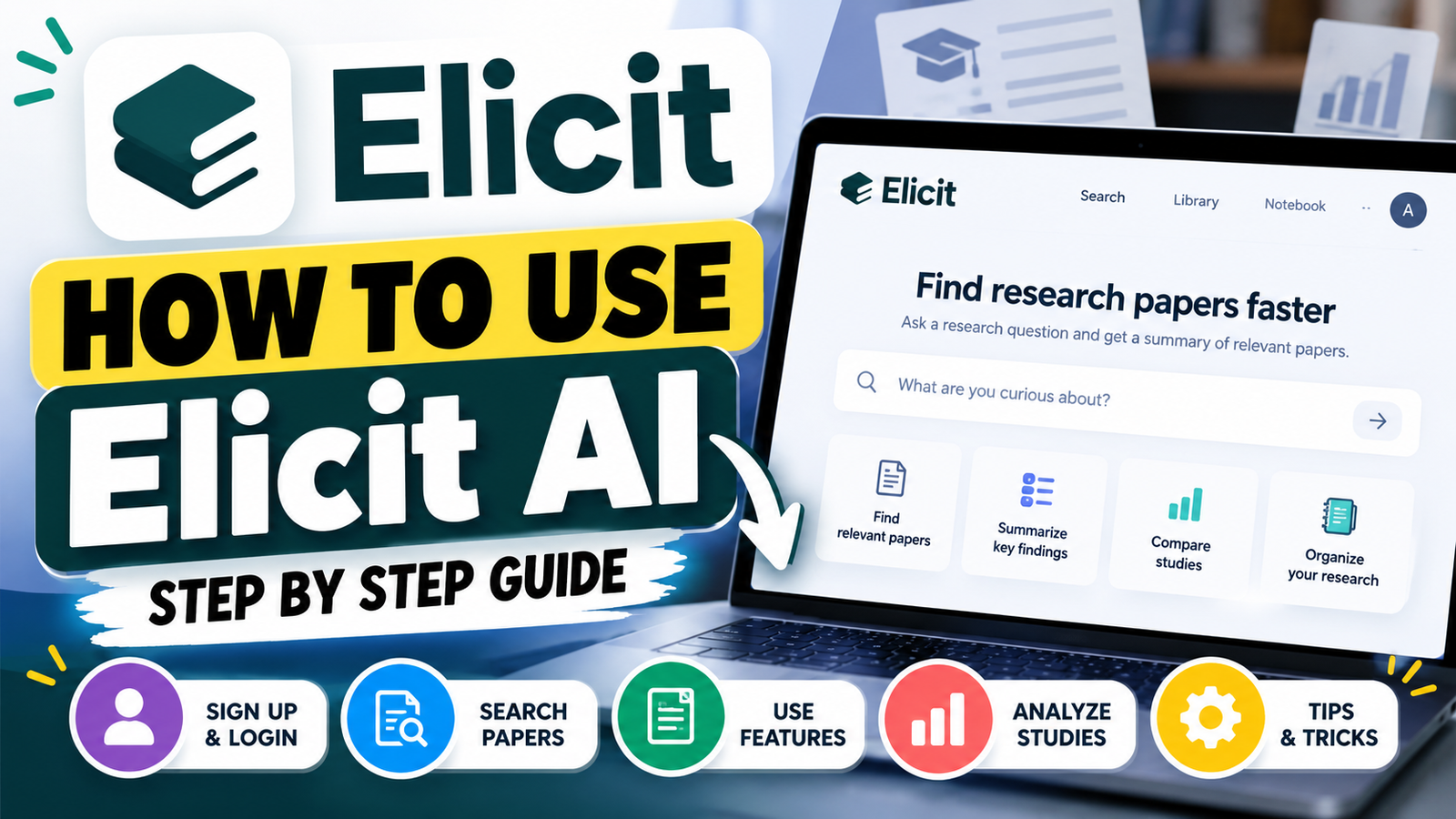
Searching hundreds of academic papers can feel like a full-time job. You may spend countless hours comparing findings and seeking reliable data for your work. Fortunately, Elicit AI handles much of your literature review.
This powerful tool finds relevant studies, summarizes complex arguments, and extracts key insights in seconds. Elicit AI streamlines your workflow, letting you analyze results instead of sorting endless search results.
This guide walks you through the entire process. You will learn to create your account, navigate the interface, and use advanced search techniques. Whether you are a student or professional researcher, mastering this technology can greatly boost your productivity.
Key Takeaways
- Learn how to quickly sign up and set up your research workspace.
- Discover how to automate literature reviews and paper discovery.
- Understand the best methods for summarizing complex academic studies.
- Extract vital data points from multiple sources simultaneously.
- Improve your overall research efficiency using modern digital tools.
What Is Elicit AI?
Elicit AI uses language models as an advanced research assistant for time-consuming academic tasks. When you learn how to use Elicit AI, you can search millions of research papers quickly and accurately.
This tool acts as a digital research partner for complex literature reviews and data extraction. It fits smoothly into your workflow by turning large amounts of information into actionable insights.
“The best research tools do not just find information; they help you synthesize and understand the core arguments within that information.”
This elicit ai tutorial for beginners helps students and professionals find papers, review concise summaries, and compare evidence. Organizing research in one place lets you focus on critical thinking instead of manual data entry.
Ultimately, Elicit AI changes how you use academic databases. Mastering how to use Elicit AI lets you spend less time searching and more time developing unique research contributions. Following this elicit ai tutorial for beginners gives you the foundational knowledge to excel in academic projects.
How Does Elicit AI Work?

If you wonder how does Elicit AI work, this guide explains its process. The platform acts as a research assistant, connecting natural-language questions with large academic databases. This elicit ai tutorial shows how Elicit processes requests and returns useful results.
The workflow starts when you enter a research question or topic into the search bar. Rather than matching simple keywords, the AI studies your query’s meaning to find relevant scholarly papers. It then scans millions of documents for accurate, high-quality sources that address your inquiry.
After finding possible papers, it uses automated data extraction to collect key findings, methods, and conclusions. You get a structured summary for comparing studies side by side without reading every page. This feature cuts the time needed for initial literature reviews.
Remember that Elicit AI is a supportive tool, not a replacement for scholarly judgment. Although its summaries are highly efficient, always verify important claims by consulting the original research papers directly. This critical approach keeps your research accurate, reliable, and based on primary evidence.
How to Sign Up for Elicit AI
You can unlock powerful research tools by following these simple registration steps. This elicit ai guide explains the initial setup process and helps you begin efficiently. Knowing how to sign up for elicit ai helps you create a secure, productive research environment.
Open the Official Elicit Website
Before starting, confirm that you are visiting the official platform. The correct domain protects your personal data and gives you the latest software version. Always double-check the URL in your browser address bar to confirm the site is legitimate.
Create Your Elicit Account
After confirming the website, begin the elicit ai sign up process. Enter accurate information to support account recovery and receive important research tool updates.
- Locate the sign-up button on the homepage.
- Enter your professional email address and create a strong, unique password.
- Review the terms of service to understand how your data is handled.
- Complete the verification step sent to your email inbox to activate your profile.
Log In to Elicit AI
After verification, you can access your dashboard at any time. The elicit ai login process is quick, so you can start academic tasks without delay.
Return to the main page and select the login option. Enter your credentials carefully to protect your research workspace. If you forget your password, use the recovery link on the login screen to regain access quickly.
How to Use Elicit AI Step by Step

Learning how to use Elicit AI step by step lets you search complex databases with ease. A clear workflow makes your literature review manageable and efficient.
Start a New Research Query
To begin, craft a clear and focused research question. When you learn how to use Elicit AI for research, precise input improves your results.
Instead of broad keywords, frame your query as a specific question. This helps the AI understand your inquiry and provide more relevant academic results.
Search for Academic Papers
After you submit your query, the platform scans millions of papers for relevant matches. Advanced language models identify studies that address your specific question.
- Review the top results to ensure they align with your topic.
- Check the publication dates to maintain the currency of your data.
- Look for high-impact journals to ensure the credibility of the sources.
Review and Filter Research Results
After the first search, refine your findings to save time. Understanding how to use Elicit AI step by step involves mastering the dashboard’s filtering tools.
You can filter by year, study type, or specific methodology to narrow the list. This step is crucial for removing noise and focusing on the most valuable literature for your project.
Read and Analyze Research Papers
Finally, examine the selected papers. Elicit AI provides summaries that help you grasp core arguments without reading every page from start to finish.
Always verify the information by consulting the original source. Although AI supports discovery, your critical thinking remains the most important part of research.
Key Features of Elicit AI
This elicit ai research assistant can improve your workflow with its advanced tools. It automates tedious tasks, so you can focus on critical thinking instead of manual data gathering. These elicit ai features connect large academic databases with your project needs.
AI-Powered Research Search
Traditional search engines often match exact keywords, which can produce irrelevant results. Instead, this elicit ai research tool uses semantic search to understand your query’s purpose. It finds useful papers even when they use terms different from yours.
Research Paper Summaries
Reading dozens of full articles takes time and can feel overwhelming. The platform creates concise, accurate summaries that show each paper’s main findings. This helps you decide quickly whether a study deserves closer attention.
Paper Comparison and Analysis
Organizing information from many sources challenges every researcher. Use the comparison view to place key findings, methods, and participant details side by side. This elicit research assistant helps you spot trends or contradictions in the literature you collected.
Data Extraction
Beyond summaries, the tool pulls specific data from complex texts. It can extract sample sizes, statistical results, and research methods automatically. Always check these details against the original document for maximum accuracy in your final report. Using this elicit ai research tool gives you a strong partner in your academic journey.
How to Use Elicit for Literature Reviews

You can improve your research workflow with Elicit AI, which streamlines each stage of a literature review. Using elicit ai for research in daily tasks moves you beyond keyword searches toward a more systematic method. This approach keeps your findings comprehensive and easy to track.
Begin by clearly defining your research question. A clear query helps the tool find relevant academic papers for your specific topic. Review the initial results to discover the core literature that supports your study.
Screening results is the next vital step in any elicit literature review. Filter papers by publication date, method, or specific outcomes to find high-quality data. Critical evaluation remains your responsibility, because automated tools cannot replace your academic judgment.
After screening, use the platform to extract evidence, including sample sizes and key findings, from the papers. This creates a transparent evidence trail for a more reliable final synthesis. It also helps you find research gaps that your work might address.
Learning how to use elicit for literature review well means balancing automation with human insight. Let AI handle the heavy lifting of data organization, but always check the context of its summaries. This repeatable process saves significant time while preserving the high standards required for academic excellence.
How to Find Research Papers with Elicit
Finding the right academic literature can feel overwhelming, but how to search research papers with Elicit makes the process easier. By learning the platform’s search interface, you can find high-quality, peer-reviewed sources for your projects faster.
For an effective elicit ai paper search, begin with a clear, specific research question. Avoid broad keywords, and phrase your query as a question or specific hypothesis. This helps the AI understand your inquiry’s context and return more relevant results.
If results seem too broad, refine your search with specific filters. Narrow results by publication date, study type, or specific methodology. To learn how to find academic papers using elicit effectively, revise your search terms until results match your inclusion criteria.
“Research is formalized curiosity. It is poking and prying with a purpose.”
After you collect potential papers, screen them for quality and relevance. Read each abstract and methodology section to check whether it meets your academic standards. Verifying your sources is essential for building reliable literature that supports your final research goals.
Elicit AI Pricing and Plans

Before adding this platform to your daily workflow, review the current elicit ai pricing structure. This review shows whether the tool fits your budget and research needs.
Visit the official website for the latest elicit ai plans. These pages explain subscription tiers, monthly limits, and each feature set available to users.
When comparing options, review the billing terms and possible changes to service levels. Compare included features with your research needs before choosing a long-term subscription.
Checking these details helps you choose the right package for academic or professional goals. Always check for updates to elicit ai pricing to avoid billing surprises.
Elicit AI Free vs Paid Plans
Choosing between Elicit’s free and paid versions depends on your academic or professional workload. The elicit ai free plan suits casual users but limits monthly queries and data-processing tasks.
If you conduct large literature reviews or need deep data extraction, an elicit ai paid plan may suit you better. Premium tiers usually offer higher limits, faster processing, and advanced analysis tools for complex research workflows.
The primary difference often involves how many research papers you can analyze at once. Free users may face caps on summaries and comparisons, while paid subscribers get stronger tools for heavy research.
Subscription models and features can change, so check current allowances on the official Elicit website. Choose the elicit ai free plan for occasional searches or the elicit ai paid plan for professional projects, and match features to your research goals.
Pros and Cons of Elicit AI

An honest elicit ai review weighs the platform’s speed against its risk of errors. Every research tool has trade-offs that may speed your work or create extra hurdles. These details help you decide whether the technology fits your academic or professional goals.
Pros of Elicit AI
The platform’s main strength is its remarkable efficiency when scanning large databases. It can save hours of manual work by finding relevant papers and extracting key data at once. This streamlined approach lets you focus on high-level analysis instead of the first search.
It can also combine information from many sources. The tool creates summaries that show common themes, which helps when you begin a literature review. Many users find this automated synthesis gives their writing and critical thinking a strong base.
Cons of Elicit AI
Despite its power, this elicit ai review must note that the tool is not perfect. Treat its output as a starting point, not a final authority. It may produce hallucinations or misread complex technical data, so you must verify each result manually.
Your results also depend on the quality and availability of the underlying databases. If a niche topic lacks enough digital coverage, the AI may struggle to offer useful insights. Stay critically engaged, because the platform’s value depends on checking every claim against its original source.
Who Should Use Elicit AI?

Students and seasoned analysts can use how to do research with Elicit AI to improve daily productivity. This tool helps users synthesize large amounts of academic literature into useful insights. It supports users who value speed and precision when gathering evidence.
Academic researchers and university students often gain the most from this platform. It finds relevant papers automatically, so you spend less time searching and more time analyzing complex data. Professionals in medicine, law, and public policy can organize findings into structured tables.
Technology is a supplement, not a replacement for critical thinking. Learning how to do research with Elicit AI saves time, but expert review remains essential for checking claims. Always perform traditional source-checking to confirm the accuracy of your final work.
If you want to streamline your workflow and manage vast amounts of information, this tool is a game-changer. It suits users who need structured evidence searches without getting lost in traditional search engines.
Elicit AI vs Traditional Research Methods

Academic research can use modern automation or classic rigor. An elicit ai comparison with traditional research methods weighs speed against careful manual checks.
Traditional approaches may require hours of manual database searching. Researchers screen abstracts one by one and take detailed notes by hand. These methods build subject knowledge, but modern publications can make this work overwhelming.
Elicit AI automates data extraction and early synthesis, reducing the heavy lifting. It helps you find relevant papers quickly and arrange findings in a clear structure. Still, technology is a supplement, not a replacement for critical thinking.
To maintain high standards, consider how these two approaches can support each other:
- Speed and Efficiency: Use AI to scan thousands of papers and extract key data points in seconds.
- Source Validation: Rely on traditional methods to verify the credibility of sources and check for potential biases.
- Detailed Interpretation: Apply your own expertise to synthesize complex arguments that AI might oversimplify.
- Rigorous Scholarship: Combine the breadth of AI-assisted search with the depth of manual, close-reading techniques.
The strongest research strategy combines both approaches. An elicit ai comparison shows digital tools improve efficiency, while traditional research methods support academic integrity. This balance keeps research fast and fundamentally sound.
Tips for Getting Better Results from Elicit AI

Precision can transform your research process when you use Elicit AI. These elicit ai research tips help you move beyond basic searches toward meaningful insights. Ask specific questions instead of broad, general ones so the AI understands your research goal.
Iterative searching helps you refine your results. If your first search misses useful papers, adjust your keywords or change your query’s wording. Experimenting with different terminology can reveal links between academic studies that one search might miss.
After you gather results, filter them carefully to support a strong literature review. Check each paper’s publication date, methodology, and citations to confirm its relevance. Use Systematic note-taking to track the sources most valuable to your project.
For better results from elicit ai, compare AI summaries with the original research papers. This check supports accuracy and reveals details automated tools might miss. If summaries do not fit your goals, document your decision-making process and revise your search parameters.
Finally, treat your research as an ongoing conversation with the tool. By consistently refining your approach and recording your findings, you can build a stronger, more reliable foundation for academic work. Stay organized and critical throughout the process to improve your chances of success.
Frequently Asked Questions About Elicit AI

People exploring modern research platforms often ask similar questions about access and academic use. These elicit ai frequently asked questions can clarify the platform’s features and improve your workflow.
Is Elicit AI free to use?
You may ask, is elicit ai free for your needs. It offers a free version with limited credits, so you can test its core features.
Always verify the current access terms on the official website. Pricing and credit limits can change, while paid plans offer higher limits and advanced research tools.
Is Elicit AI good for academic research?
For elicit ai academic research, the tool supports literature reviews and data synthesis. It organizes large amounts of information and speeds up early discovery.
Although effective, you must evaluate research quality carefully. Cross-reference findings with primary sources to protect accuracy and academic rigor.
Can Elicit AI find research papers?
Yes, the platform helps you find academic literature related to your questions. Its search algorithms scan databases and list papers matching your research interests.
This feature helps when starting a project and finding key studies quickly. It saves you from browsing endless search engine results.
Can Elicit AI summarize research papers?
The platform creates summaries that highlight a paper’s main findings and methods. These summaries are useful aids for quick scanning and checking a document’s relevance.
Remember that summaries not be used as substitutes for important source texts. Always read the original paper in its entirety to understand the author’s arguments, nuances, and context.
Final Thoughts on Elicit AI
Modern research needs reliable digital partners to handle demanding work. Elicit AI changes how you find papers, extract data, and organize complex evidence. It supports your academic workflow as a powerful research engine.
Efficient literature reviews begin with a clear strategy. Elicit AI can automate summaries and comparisons, helping you save valuable time. This elicit ai conclusion shows that technology builds deeper understanding without replacing critical thinking.
Always check software outputs against the original source materials. Transparent methods keep your work credible and accurate. Combine the speed of automated insights with your scholarly judgment to produce high-quality results.
Explore Elicit AI features to see how they fit your research needs. Share your experiences with peers to improve your approach to academic discovery. Your commitment to rigorous standards remains the most important part of every successful study.