Imagine making movies just by talking about them. You don’t need to know how to edit to tell stories. Today’s artificial intelligence makes creating videos easy for everyone.
This tool is like a superpower for your ideas. It uses machine learning to turn your words into pictures. It’s perfect for making videos for social media or short films.
In this guide, you’ll learn how to start and set up your account. We’ll show you how to make professional videos easily. Get ready to learn about the future of digital stories in the United States.
Key Takeaways
- Learn how to sign in and set up your account for immediate use.
- Discover how to write effective prompts for better visual results.
- Understand the core features that make video generation simple.
- Explore tips for creating cinematic content without editing experience.
- Master the workflow to produce high-quality clips in minutes.
What is Google Flow AI?
Google Flow AI makes complex digital tasks easy. It’s an intelligent assistant for creating professional videos, even if you’re new to editing.
It uses natural language processing to understand your text. This helps create scripts and storyboards. At the same time, machine learning algorithms suggest the best parts of your media for your project.

Overview of Features
The platform has tools to make your production easier. It can turn simple ideas into video stories quickly.
It also helps with editing by finding important moments in your footage. This keeps your video engaging and polished. Plus, it makes managing projects simple, so you don’t get lost in technical details.
“Technology is best when it brings people together and simplifies the creative process, allowing ideas to flourish without barriers.”
Benefits of Using Google Flow AI
One big plus is how it saves time. The software does the hard work, so you can focus on your story.
Its use of natural language processing makes it easy for beginners. You don’t need to know a lot about software to get great results. This tool helps you make consistent, professional content that connects with your audience, all while keeping the creative process smooth.
How to Sign In to Google Flow AI
Starting with Google Flow AI is easy. Make sure you have a good internet connection and a valid email. Security is key, so pick a strong, unique password to keep your work safe.
Creating Your Google Account
If you don’t have an account, you need to make one. A Google account lets you use many services easily. Having a secure account keeps your projects safe and only for you.
After your account is ready, you can use automation to make your work easier. Keep your login info up to date to avoid any hiccups. This helps you focus on creating without interruptions.
Step-by-Step Sign-In Process
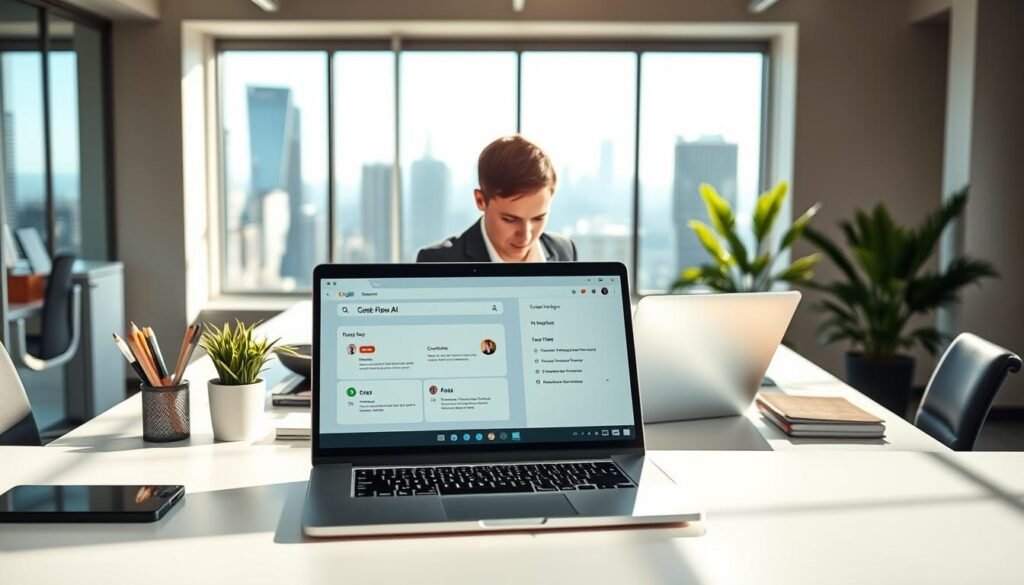
Logging in is fast and simple. Here’s how to get started with Google Flow AI:
- Go to the Google Flow AI login page in your browser.
- Type in your email linked to your Google account.
- Enter your password and complete any extra security steps if needed.
- Hit the “Sign In” button to get to your dashboard.
After logging in, Google Flow AI remembers your settings and projects. This means you can jump right back into your work. Enjoy the ease of a quick login and get ready to use Google Flow AI’s advanced tools.
Setting Up Your Google Flow AI Profile
Customizing your user profile makes the platform fit your creative needs. Adjusting your settings ensures the interface works well with your workflow. This setup is key for keeping productivity and focus high over time.
Customizing Your Preferences
Your dashboard settings control how your projects are organized and tools are suggested. You can choose themes, set up notifications, and pick default export settings that match your brand. Customizing these makes your workspace faster and more efficient.
The platform uses your activity history to suggest better projects for you. By turning on advanced data analysis, the AI learns your editing style. This leads to more fitting template suggestions based on your past work.
Connecting Other Google Services
Connecting your account with other tools makes managing your media assets easier. You can link storage drives to import files straight into your projects. This saves a lot of time at the start of production.
For pros, linking to the Google Cloud Platform opens up more for big projects. It gives you better storage and faster rendering for high-def content. Using these tools keeps your creative work scalable as your video collection grows.
Creating Your First AI Video
Starting your video project is exciting. You’ll pick the perfect base for your story. Whether it’s for marketing or a personal vlog, the platform helps your project look great from the start.
Choosing the Right Template
Templates are your guide. You can explore many options by industry, style, and mood. This helps you find the right fit for your project.
- Corporate styles for professional updates.
- Dynamic transitions for social media.
- Minimalist designs to focus on your message.
Choosing a template doesn’t limit your creativity. It gives you a structured framework to save time. You can then customize it to make it your own.

Uploading Your Media
After picking a template, it’s time to add your media. You can upload images, videos, and audio from your computer or cloud services.
The system supports many file formats. This keeps your high-quality footage looking sharp. Just drag and drop your files into the library to start organizing.
Editing Tools Overview
The editing tools offer a mix of creative control and artificial intelligence power. You decide the story, but the software suggests scene arrangements and audio balances.
Advanced algorithms analyze your footage for the best cuts and transitions. These tools help with the technical side, so you can focus on the story.
These features support your vision, not replace it. With artificial intelligence, you can make your videos look polished quickly. This lets your unique voice shine in every video.
Using AI Features in Google Flow AI
Automation connects your creative ideas to a finished product. It uses smart tools to handle the technical parts, so you can focus on the creative aspects. These tools help you go from idea to finished product faster and more efficiently.

Automatic Script Generation
The platform uses natural language processing to create scripts for you. It analyzes your needs to suggest stories that fit your brand. This saves you a lot of time on brainstorming and writing.
“Technology is best when it brings people together and simplifies the complex tasks that stand in the way of true creativity.”
Even with these tools, it’s important to review every generated result before you’re done. Automation helps, but it can’t replace your own judgment. Always check the text for accuracy, tone, and flow to meet your standards.
Voiceover Options
When your script is ready, you can pick from AI-driven voiceover options. These voices sound very human and expressive. You can choose different accents, pitches, and speeds to fit the mood of your video.
This makes it easy to try out different voices to see what works best. You don’t need expensive recording gear or professional voice actors for most projects. You can adjust the pace and emphasis of the narration to your liking.
Background Music Selection
Finding the right music for your video is key. Google Flow AI has a smart music library that suggests tracks based on your project’s theme. This automation helps your audio match your visuals without needing music theory.
- Mood Matching: Automatically filter tracks by energy level or emotional intent.
- Dynamic Syncing: Align music beats with your video transitions for a professional finish.
- Volume Balancing: Let the system adjust audio levels so your voiceover remains clear and audible.
By using natural language processing and smart audio tools, you can improve your production quality a lot. Remember, these features are there to support your creative choices. Use them to make your workflow smoother while keeping your unique perspective in every video.
Tips for Effective Video Creation
Creating great videos is all about mixing creativity with careful analysis. You need to tell your story clearly and keep your visuals focused on your main message.
“Content is king, but context is queen,” experts say. Make your message short and your visuals clear to leave a strong mark on your viewers.

Engaging Your Audience
The first seconds of your video are key to grab attention. Start with a strong opening that hits a pain point or piques curiosity.
Keep your story engaging from start to end. Use these tips to keep your audience hooked:
- Stick to a consistent visual style that shows your brand.
- Speak clearly and simply to explain complex ideas.
- Add emotional touches to connect with your viewers.
Utilizing Analytics
After your video goes live, look beyond just views to see how people interact with it. Deep data analysis helps you understand viewer behavior and spot areas for improvement.
Predictive modeling can also help you see patterns in how your audience watches videos. While it’s not a sure thing, it guides your future creative choices.
“The goal is to turn data into information, and information into insight.”
Regularly check your metrics to adjust your strategy as needed. This ongoing process keeps your videos fresh and effective over time.
Collaborating with Team Members
Scaling your video production means adding more people to your team. A clear structure keeps projects on track and quality high.
Sharing Projects
Use shared workspaces for your creative team. The Google Cloud Platform lets your team access files from anywhere.
This method avoids version control problems. It keeps all media in one spot. Here’s why it’s good:
- Real-time access to video drafts and raw footage.
- Central storage for all media files.
- Easy syncing across devices.
- Improved communication through feedback loops.
Roles and Permissions
It’s key to control who can edit or view your content. Assign roles to team members for the right access.
Machine learning helps with tasks like tagging. But, your team always has editorial control. This balance speeds up work without losing your vision.
For security, follow these tips for managing permissions:
- Give “Viewer” roles to those who just give feedback.
- Let “Editor” access for those working on the video.
- Use “Admin” roles carefully for project settings.
- Check your team list often to remove access for those who don’t need it.
Troubleshooting Common Issues
Even the most powerful platforms face technical problems sometimes. When you hit a snag in Google Flow AI, stay calm and methodical. This approach helps solve issues quickly.
Most problems come from simple issues like connectivity or browser settings. By checking these things first, you can often fix the problem yourself.
Sign-In Problems
If you can’t log in, first check your username and password. Make sure your caps lock is off and you’re using the right email.
Your browser cache might be the culprit if it’s holding onto old data. Try these steps to fix it:
- Clear your browser cache and cookies.
- Try signing in with an incognito or private window.
- Make sure your internet connection is stable.
- Refresh your browser or restart the app.
Video Rendering Errors
Rendering errors often happen with complex media or conflicting settings. Google Flow AI uses advanced algorithms to work on your projects. It needs specific file formats to work right.
“The secret to mastering any complex tool is learning how to troubleshoot the small errors before they become big problems.”
If your video won’t export, check if your media files are compatible. Big, uncompressed files can slow down the system. Try optimizing your files before uploading.
If the problem continues, simplify your project. Remove heavy effects or shorten the timeline. Often, this lets the system finish the job.
Best Practices for Video Marketing
Mastering video marketing in 2026 is about mixing creativity with data. Artificial intelligence helps make sure your content hits the mark with your viewers. It also keeps you ahead in the US market.
Target Audience Analysis
Knowing your viewers is key to success. Predictive modeling helps guess what topics and formats will grab their attention.
But, don’t forget to do your own research and test your content. These tools help spot patterns in viewer behavior. This lets you tailor your messaging to your audience’s changing needs.
SEO for Video Content
Getting your videos to show up in searches is vital. Artificial intelligence can create metadata that matches current trends. This includes titles, descriptions, and tags.
Create content that answers your audience’s questions. Smart keyword research and quality production boost your search rankings. Remember, consistency and relevance are key for lasting success in video marketing.
Staying Updated with Google Flow AI
Master your workflow by keeping up with the latest changes and insights from the AI community. Being informed helps you stay ahead in digital innovation. It also maximizes your creative projects’ full potentials.
Upcoming Features in 2026
The world of Google Flow AI is always changing with new features. It’s key to know the difference between confirmed updates and future possibilities. This helps you plan better without surprises.
Always verify big updates by checking official release notes. This ensures your content strategy stays on track. Watch for announcements on better integration and automation tools.
Community and Support Resources
Need help with technical issues or want deeper insights? There are many support channels available. The Google Cloud Platform documentation is a top resource for understanding the tech behind your projects.
For more, join the user community to share tips and solve problems. Here are some great resources for success:
- Official Google Flow AI help centers for step-by-step guides.
- Developer forums on the Google Cloud Platform ecosystem.
- Community-led social media groups for learning from others.
- Webinars and live Q&A sessions with product experts.
By joining these spaces, you learn a lot and keep your skills sharp. You’ll never feel alone as you grow your video library.
Conclusion
Learning Google Flow AI makes your creative work easier. You now know how to use the interface, manage your profile, and make professional videos with automated tools.
Balancing Automation and Human Insight
The platform uses machine learning to suggest changes and improve your media. Natural language processing helps create scripts. But, your own judgment is key to making sure everything fits your brand and quality standards.
Building Your Skills Through Practice
Begin with a simple project to get better at using the interface. Try out different templates and voiceover options to see how machine learning works for you. As you get better at using natural language processing, your content will improve. Regular practice will make these advanced tools feel like second nature.